
How a healthcare platform cut rework 68% by shifting quality left
A patient-scheduling platform was burning 340 engineering hours a month on unclear requirements. After scoring story health before code, they cut rework 68%, recovered $564K a year, and started catching HIPAA gaps in refinement instead of UAT.
- Case study
- Healthcare
- Compliance
- Requirements quality
- Quality gate

A quality problem that was really a requirements problem
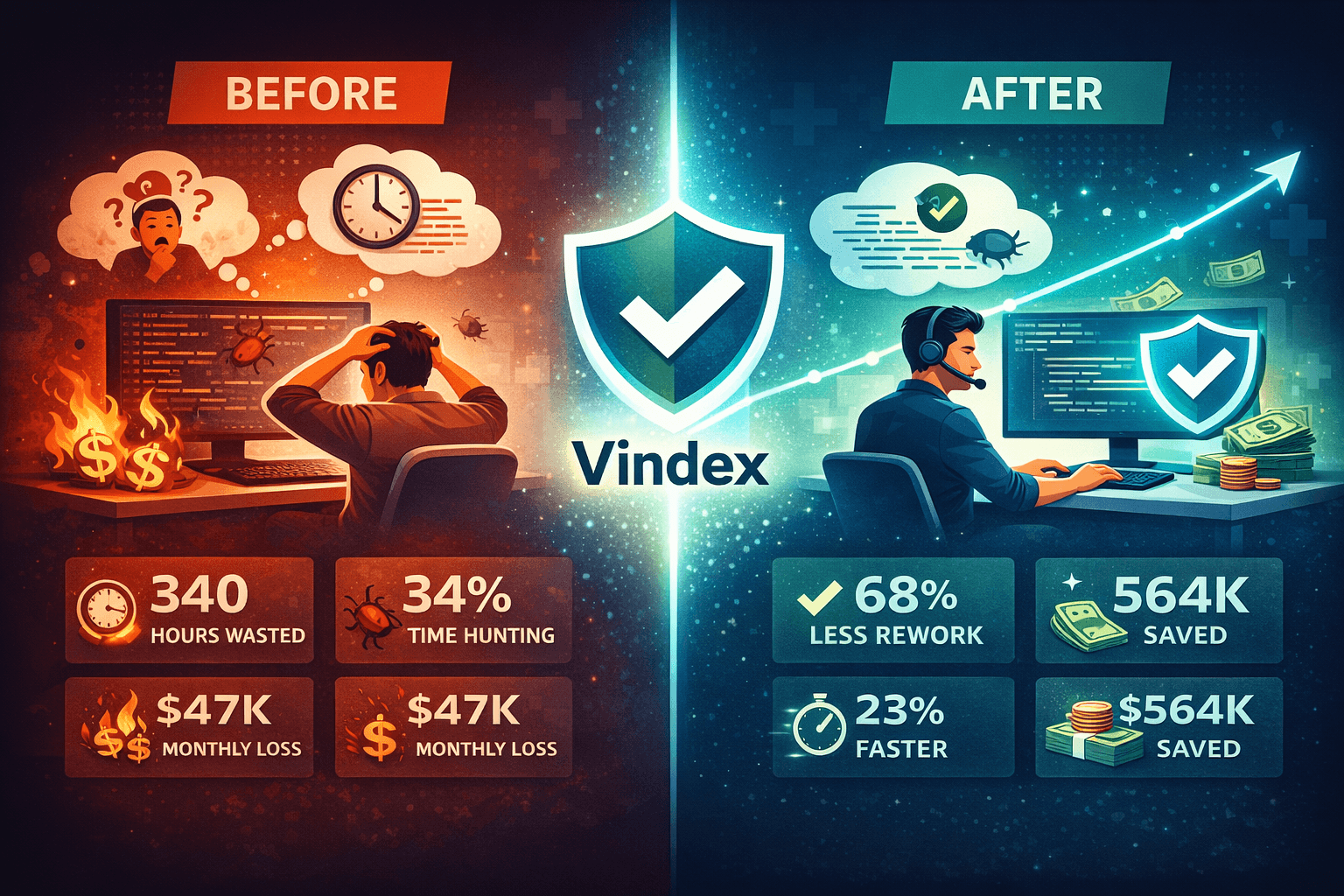
MedConnect (name changed), a patient scheduling and communication platform serving more than 450 healthcare providers, had a technically strong engineering team that spent its days firefighting preventable issues. Sprints opened with an 85% story point commitment and consistently delivered 52%. Most post-deployment bugs traced back to the same root cause: requirements that were never clear in the first place.
The cost was concrete. The team lost an estimated 340 engineering hours every month to requirements-related rework, about $47,000 a month at their blended rate. Features took two weeks longer than competitors, and HIPAA reviews surfaced issues in one of every three features during UAT, each one an expensive emergency fix.
68%
Reduction in development rework after scoring story health before code.
$564K
Annual engineering capacity recovered, with a 14-day payback.
23%
Faster feature delivery as ambiguity left the backlog.
The fix: a quality gate before the sprint, not another review after it
Adding more testing or code-review layers would have slowed delivery further. Instead, MedConnect moved quality upstream, on the premise that most rework starts with requirements that were never ready for development. They put a quality gate in front of the sprint and let Vindex score every story as it was written.
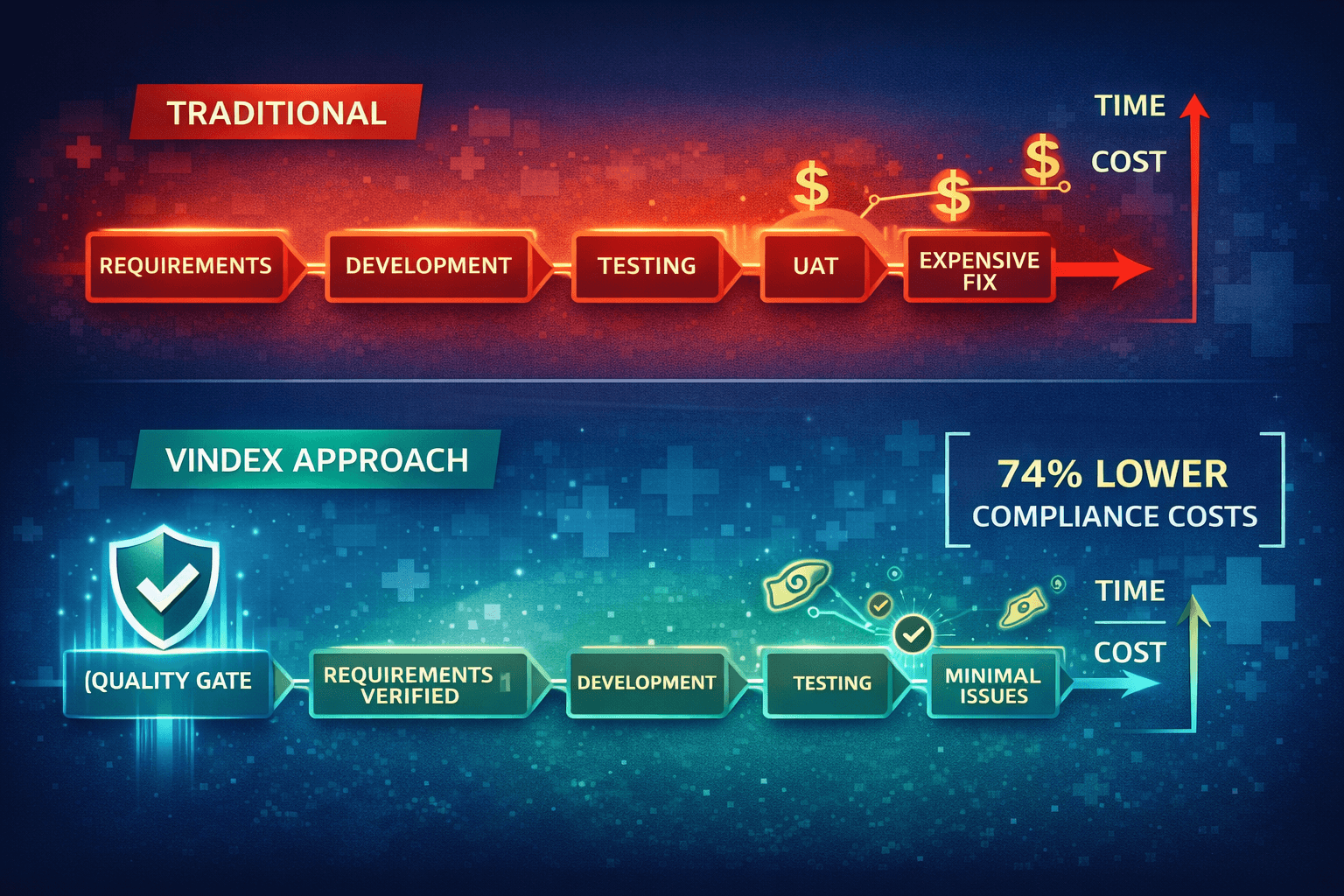
Three things changed the day the gate went in. Every story was scored against a clear readiness threshold, which ended the endless Product-versus-Engineering debate about what "ready" means. Referenced design files, API docs, and compliance guidelines were checked for relevance, not just presence, so the "that Figma file is outdated" discovery stopped happening three days into a build. And any story touching patient data was flagged when it was missing the required HIPAA controls, at definition time, not at UAT.
Rollout took three weeks, from pilot to full use across four product teams.
We thought we had a quality problem. We actually had a requirements problem. Vindex gave us the discipline to fix issues before our best engineers waste time on them.
The results: from firefighting to flow
MedConnect measured impact monthly against its baseline. The shift-left approach held up across cost, speed, and quality at the same time.
| Metric | Before | After | Change |
|---|---|---|---|
| Development rework | 340 hrs / mo | 108 hrs / mo | -68% |
| Sprint commitment delivered | 52% | 89% | +71% |
| Feature delivery time | 6.2 weeks | 4.8 weeks | -23% |
| Stories blocked on clarification | 34 / sprint | 4 / sprint | -88% |
| Post-deployment defects | 47 / qtr | 15 / qtr | -68% |
| HIPAA-related rework | $85K / qtr | $22K / qtr | -74% |
Why a quality gate sped things up instead of slowing them down
The team's first worry was bureaucracy. In practice, removing ambiguity accelerated delivery: developers received clearer requirements and spent far less time hunting for context, so feature delivery improved 23%. Vindex made quality visible inside the existing workflow (a score and a list of gaps on the ticket) and let the team decide how to proceed. Nothing about how work moved through the board had to change.
When this approach makes sense
The shift-left play fits best when ambiguity is genuinely expensive: regulated industries like healthcare, finance, and legal; teams that lose more than 20% of their time to context-switching and clarification; backlogs where post-deployment bugs keep tracing back to unclear requirements; and organizations scaling product teams that need to hold a consistent quality bar. MedConnect onboarded three new product managers in a quarter without quality slipping, because the standard lived in the gate rather than in one senior person's head.
Continue reading
Case study
Bad Scores Cost Real Money: A $1.2B Automotive Recall Study
How the lowest-scoring requirements in a 400,000-ticket pilot traced to $1.2 billion in software-related recall costs.
Read nextCalculator
Estimate what weak requirements cost you
Use the savings calculator to put a number on the rework hiding in your own backlog.
Read nextFind the rework hiding in your requirements
Run a three-week Vindex pilot on your own backlog and get a baseline story-health report, a measured results readout, and a rollout plan, without adding process overhead.
Start a pilot